More sticky than other brands
NEW SEASON. FRESH GEAR.
30-day return policy
In rugby, aerial battles are often the most exciting and pivotal moments, easily creating game-changing opportunities. Whether it’s an offensive wide receiver jumping to catch the ball or a defensive interception and disruption, whoever can “lock in” the ball in the air first can often change the course of an attack or even the entire game.
Many spectators only see jumping ability and explosiveness, but overlook a crucial piece of equipment— football gloves.
Many newcomers to competitive sports might think that wearing gloves makes little difference. However, in high-altitude combat scenarios, the grip stability, friction, and control provided by gloves far exceed expectations.
Below, we’ll systematically explain from a practical perspective why gloves become an “invisible factor of victory” in high-altitude ball battles.
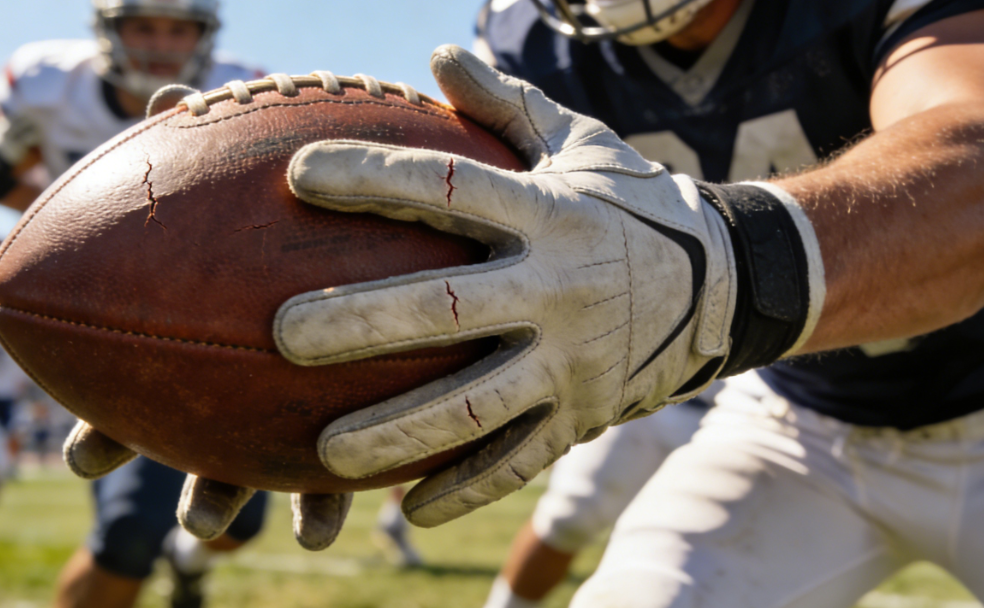
To sum it up: high-altitude balls are not as simple as “jumping up and catching them”.
High ball battles typically present several challenges simultaneously:
In this situation, the quality of the “first contact” between the hand and the ball is extremely important. If the first contact slips, deviates, or vibrates too much, it is almost impossible to recover. This is where the value of the glove becomes apparent.
Modern football gloves typically feature a high-friction material on the palm, with many models having an adhesive coating texture that significantly increases friction with the ball’s surface.
A typical situation when catching a ball in the air is:
Without gloves, relying solely on skin friction, it’s easy to miss the ball. However, with gloves on, even with an imperfect contact angle, there’s a higher probability of the ball sticking to the palm area.
Once, I watched a semi-professional training match with a friend. He had been missing the ball three times in a row with his high throws, but after he put on football gloves, his success rate improved significantly. He himself said that the most intuitive feeling was that “the ball no longer felt like it was coated with oil.”
In aerial battles, it’s common to see players catching the ball with one hand outstretched, for example:
High-quality football gloves can help players create a more stable contact surface when using one hand, increasing the success rate of “one-handed ball lock“.
This is why many wide receivers, cornerbacks, and returners almost always wear football gloves – because they are in positions where they face the most situations where they have to catch the ball with one hand at the limit.
Many people mistakenly believe that gloves will reduce the feel of the ball, but professional football gloves are actually designed for balance:
When a ball falls from a high altitude, the impact is significant, and contact with bare hands can easily cause the ball to bounce due to the vibration. Football gloves can provide some cushioning, allowing the ball to enter your control more smoothly.
Not all positions require gloves in the same way.
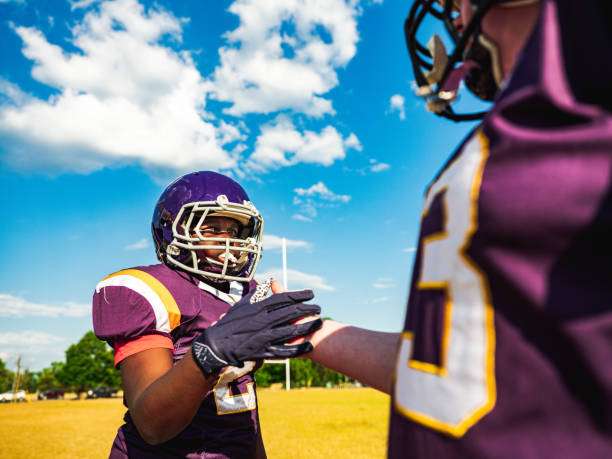
In dry conditions, football gloves can already provide an improvement; but in complex weather, their value is amplified.
Many amateur players only realize for the first time in the rain that gloves are not “bonus equipment,” but rather “stability equipment.”
One point needs to be clarified: football gloves are not magic props; they are tools to amplify the effects of techniques.
Correct high-altitude ball-catching techniques include:
When these movements are performed correctly, gloves can increase the success rate; however, if the movements are incorrect, even the best football gloves cannot save you from technical problems.
Focus on four key indicators:
I usually recommend doing a “one-handed ball-catching simulation” when trying on the gloves, as this is the quickest way to determine if the football gloves are suitable.
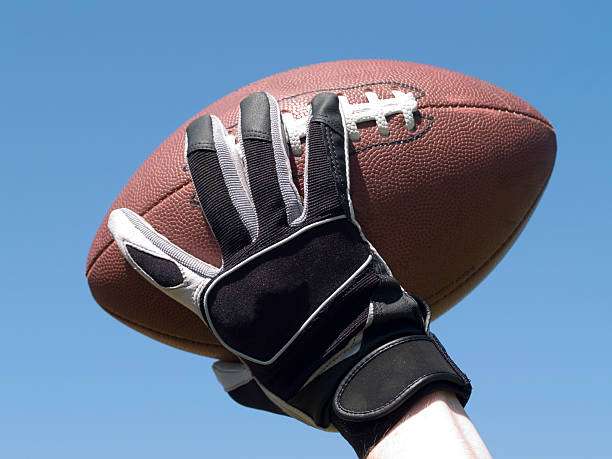
Fighting for the ball in the air is never just a contest of jumping ability and courage; it’s a comprehensive test of judgment, technique, and equipment support. In crucial moments, a little more friction and a little more stable control can mean a bigger chance of successfully receiving the ball.
Football gloves are one of the key pieces of equipment that transform this “small advantage” into “consistent performance.”
If you are improving your catching skills, preparing for a match, or want to increase your success rate in duels, it is recommended to choose a pair of football gloves that suit you as early as possible to get used to them and make the training results truly pay off in the air.

Free delivery in the US region

30 day return policy

7-24 hour response

Support PayPal and Card Payments
No account yet?
Create an Account