More sticky than other brands
NEW SEASON. FRESH GEAR.
30-day return policy
In football, football gloves are standard equipment for many players. Especially for receivers, having a pair of football gloves with good grip seems to guarantee a successful catch. However, the reality is not so simple. Wearing gloves does not mean you can reliably catch every pass.

Football gloves are:
Increased grip: The palm of the glove is made of special silicone, rubber particles, or adhesive material, which helps to increase the friction between the ball and the hand.
Protect your hands: Gloves can reduce finger injuries, abrasions, or chafing during impacts and falls.
Improved comfort and confidence: The fit and softness of the gloves allow players to feel more stable in their hands during the game.
It’s important to note that gloves are not “magic tools.” They merely provide assistance based on basic hand skills. The real factors determining the success rate of catching the ball are still the player’s hand-eye coordination, catching technique, and reaction speed.
Many players believe that catching the ball will be easy if the football gloves are sticky enough. But this is not the case:
Over-reliance on stickiness: If gloves rely too much on stickiness, players may neglect the action of spreading their fingers and wrapping their palms around the ball when receiving it, causing the ball to slip off during high-speed passes.
Environmental factors: The stickiness of football gloves decreases in rainy, muddy, or cold weather, and over-reliance on them may increase errors.
Reduced ball feel: Overly thick or sticky gloves reduce the hand’s feel for the ball, making it difficult for players to judge the ball’s spin, landing point, and force.
Tip: When choosing gloves, pay attention to the balance between grip strength and dexterity, which can increase friction without affecting finger dexterity.
Football gloves used by receivers, running forwards, and defensive backs differ significantly during a match. The misconception that “wearing gloves means you can receive the ball” often overlooks positional requirements.
For receiving players: thin, flexible, and strong-grip football gloves are needed to allow the fingers to wrap around the ball.
Running forwards or defenders: prioritize durability and protection, with relatively lower requirements for ball control.
Competitions in special environments: Cold or slippery surfaces require different glove materials, and overly uniform gloves may limit performance.
Therefore, football gloves must be selected based on the field conditions, position, and personal habits.
To truly improve catching ability, gloves are only a supplementary tool; the core lies in training the hands and eyes.
Hand-eye coordination training: Improve catching accuracy through wall ball exercises, reaction ball training, or multi-angle passing training.
Finger strength training: Use grip strengtheners, rubber balls, resistance bands, etc. to enhance finger grip strength and reduce reliance on football gloves.
Ball feel training: Practice catching balls with different speeds, angles, and spins to familiarize your palms and fingers with the ball’s trajectory.
Receiving posture training: Spread your hands, cup your palms around the ball, and follow the ball’s trajectory with your eyes. These movements are more important than any football gloves.
Simulate real-world scenarios: Have teammates make quick, random passes to improve reaction speed and the ability to judge the ball.
Practice shows that gloves can help players increase their confidence, but without solid skills, gloves alone cannot guarantee a successful catch.
football gloves” “” during matches. For example, some receivers, in rainy weather, rely too much on the stickiness of their gloves, causing the ball to slip off during high-speed passes, directly leading to mistakes. Conversely, players with solid technique and good hand-eye coordination can reliably catch the ball even with bare hands or in less than ideal conditions.
Choosing the right football gloves can maximize your support capabilities.
Proper size: Gloves that are too big or too small will affect finger dexterity and grip.
High-quality materials: The palm material should have a strong grip, and the back material should be thin and breathable.
Position matching: Receiving players should choose thin, grippy football gloves; running forwards and defenders should focus on durability and protection.
Suitable for different environments: Choose waterproof and non-slip gloves for rainy or slippery surfaces, and choose warm gloves for cold weather.
Tip: Conduct several practice matches before the official competition to test the gloves’ performance in different environments and find the style that best suits you.
Gloves not only affect physical grip strength but also affect a player’s psychology:
Increased confidence: Wearing gloves may make players feel more confident in receiving the ball, and their hands may feel more stable.
Over-reliance: If you become completely psychologically dependent on football gloves, you may become nervous and make mistakes if the gloves fail or the field becomes slippery.
Therefore, mental training is equally important. Players should simulate various environments in training to cultivate the ability to remain calm and receive the ball correctly under different conditions.
Does wearing gloves guarantee you’ll catch the ball?
Not necessarily. Gloves only increase grip strength and provide protection; the key is still hand-eye coordination and catching skills.
Are thicker gloves always better?
Not necessarily. Overly thick gloves can restrict finger dexterity and reduce ball control. Choose football gloves of appropriate thickness based on your position and the playing surface.
Are gloves effective for catching the ball in the rain?
The stickiness will decrease, so it’s recommended to choose waterproof football gloves for rainy days and practice catching the ball with wet balls.
Can I practice without gloves?
Absolutely! In fact, it’s recommended to practice ball control with bare hands. Football gloves are more for match use.
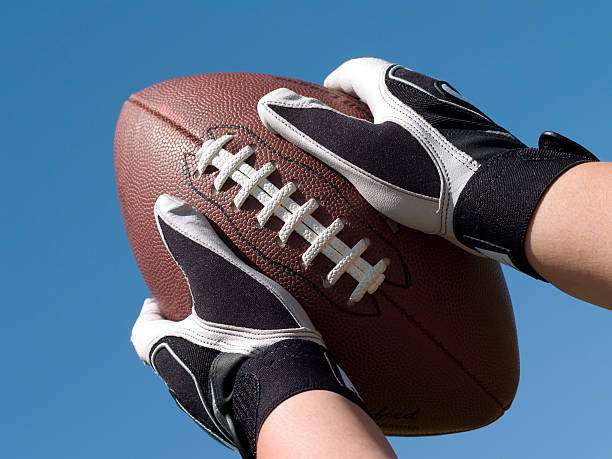
Wearing football gloves doesn’t automatically guarantee a successful catch; they merely enhance grip and protect the hands. The true determinants of a successful catch are hand-eye coordination, finger strength, ball control, and proper form. When choosing gloves, players should consider:
Material: Balancing grip and dexterity
Thickness: Maintains finger dexterity and adapts to positional needs.
Environmental adaptability: Waterproof and anti-slip design
At the same time, improving hand techniques through daily training is essential for consistent performance in matches. Remember, football gloves are just a tool; the real “magic” of catching the ball lies within yourself.
If you’re looking for a high-quality pair of football gloves, consider choosing a pair that suits your position, environment, and hand shape. Start improving your catching performance today, making every pass more stable and confident.

Free delivery in the US region

30 day return policy

7-24 hour response

Support PayPal and Card Payments
No account yet?
Create an Account