More sticky than other brands
NEW SEASON. FRESH GEAR.
30-day return policy
Many players experience numbness in their hands, which is not actually due to “training too hard.”
During sports meets, especially during periods of continuous matches or high-intensity training, many players have experienced similar feelings: as the game progresses, their fingers begin to swell and become numb, and they even find that the back of their hands are red when they take off their football gloves during timeouts.
Many people’s first reaction is—
“Am I too nervous?”
or “Was today’s training too intense?”
But from a rugby player’s perspective, this discomfort isn’t always a physical issue; sometimes it really is related to the football gloves you’re wearing.
So here’s the question: Will football gloves affect blood circulation?
The answer is not a simple “yes” or “no,” but rather—in certain situations, it is indeed possible.
If a pair of football gloves:
Therefore, in terms of its design logic, it will not affect blood circulation.
Rugby requires precise grip and explosive power; if the glove itself restricts blood flow, it doesn’t meet the sport’s requirements from the start.
However, in reality, many players experience discomfort not because “there is a problem with the glove itself,” but because of incorrect usage and selection methods.
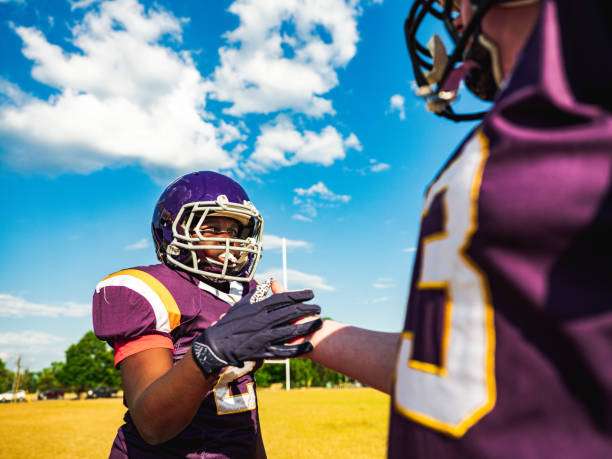
On the training field, the most easily overlooked thing is that the gloves are too small.
Many players would feel:
“Tighter, more stable grip on the ball.”
However, based on actual experience, overly tight football gloves are a high-risk factor that can affect blood circulation.
Gloves that are too small can cause several problems:
I experienced this myself during a continuous training session. I didn’t feel anything when I first put on the gloves, but in the latter half of the training, my ball-catching movements became noticeably slower, and my fingers were stiff for several minutes after I took them off before they recovered.
This condition is essentially due to restricted local blood return.
football gloves, many people only focus on the palm and fingertips but ignore the wrist area.
However, from the perspective of blood circulation, the wrist area is actually the key area.
If football gloves have the following problems:
Even if the finger size is correct, it may still cause problems during exercise:
In a competition-heavy setting like a sports meet, this sense of pressure is often amplified.
Some football gloves feel good when you first put them on, but the problem arises when you wear them for a long time.
If the material is not breathable enough:
This will make football gloves, which were originally a good fit, become “tighter and tighter.”
The result is:
It’s not that the gloves have shrunk, but that your hands have “grown.”
This is especially evident at sports meets held in hot weather.
From a rugby player’s perspective, this is a very real problem.
The reasons usually include:
It’s not contradictory that some players feel almost nothing throughout the entire game, while others start to feel uncomfortable in the third quarter.
football gloves on blood circulation is highly individualized.
Two situations need to be distinguished here:
If the latter situation occurs repeatedly, it cannot be simply attributed to “training too hard.”
From a practical perspective, there are a few simple ways to make a judgment:
If two or more of these issues occur, it is very likely that blood circulation has been adversely affected.
Q1: Is it normal for my hands to go numb after wearing football gloves for a long time?
Occasional, brief numbness is understandable, but frequent numbness is not normal.
Q2: Is it okay to change gloves during a match?
If conditions permit, changing gloves appropriately can significantly alleviate discomfort.
Q3: Does a tighter glove really mean better grip?
Not necessarily. Stability and fit are more important than simply being “tight.”
Q4: Does hot weather make circulation more likely to be affected?
Yes, high temperatures can amplify the feeling of pressure.
Q5: Is it helpful to take off your football gloves and move around a bit?
Yes, especially during timeouts and defensive switches.

In sports meets and competitions, football gloves are meant to boost confidence and stability, not to distract you.
If you start focusing on your hands instead of the ball on the field, it means that these football gloves are no longer suitable for your current situation.
Double-check your football gloves’ size and wrist fit.
Don’t just judge during the trial; simulate real training intensity before making a decision. Only a pair of
Football gloves that don’t restrict blood circulation are worthy of crucial rounds.

Free delivery in the US region

30 day return policy

7-24 hour response

Support PayPal and Card Payments
No account yet?
Create an Account