More sticky than other brands
NEW SEASON. FRESH GEAR.
30-day return policy
Imagine this: the quarterback throws a perfect spiral ball, which is flying steadily toward you. You reach out and feel the ball touch your football gloves … but the next second, it bounces off and lands, and you miss a touchdown or a crucial advance.
It’s time to stop this self-doubt. In the world of American football, catching success isn’t just about talent. To a large extent, it depends on the crucial medium between you and the ball: your football gloves .
This ultimate guide breaks down the three essential elements for beginners choosing football gloves : type of gloves , high-tech adhesive material, and, crucially, the right fit. Mastering these will allow you to capitalize on every opportunity like a pro.
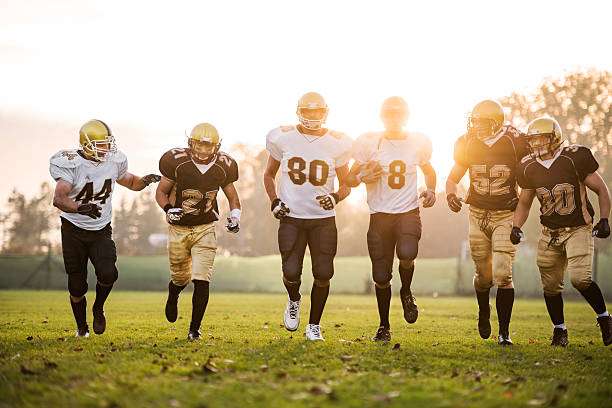
American football gloves are not universal equipment. They are designed in two distinct types based on a player’s role on the field. If you want to receive the ball, you must avoid choosing the wrong type, otherwise your turnover rate will be extremely high.
Receiver/Skill Position Football Gloves : These football gloves are designed for positions that require close contact with the ball, and their core objective is to maximize grip and hand dexterity.
Ideal players: wide receivers, tight ends, defensive guards.
Design concept: To achieve a “second skin” feel. The palm is typically covered with a high-tech adhesive material, providing maximum friction so that you feel the ball is “sucked” into your hand.
What was sacrificed? Less protection. The back of the hand is often made of lightweight, breathable, and elastic fabric in exchange for maximum freedom of movement and an exceptional feel.
Linebacker/all-around football gloves are standard equipment for the “bricklayers” on the field. They are designed to maximize protection and durability.
Ideal users: Offensive line (OL), defensive line (DL), linebacker (LB).
Design concept: Resistant to high-intensity impacts. The back of the hand is often equipped with thick cushioning pads or reinforced plastic frames to prevent finger injuries during jamming and pushing.
Core function: They are designed for pushing, pulling, and blocking, not for precise catching. Therefore, the grip of the palm is much lower than that of catching gloves, primarily providing abrasion resistance.
Beginner’s warning: If your goal is to catch the ball, but you choose a linebacker’s glove, you are essentially performing an “offensive” task with “defense” gear. Low stickiness is the number one culprit for dropping the ball.
For catching gloves, the stickiness of the palm is your lifeline. But not all stickiness is created equal. Modern technology has elevated the stickiness of football gloves to a scientific level.
The Secret of Materials
When you’re looking for gloves, you’ll mainly encounter two types of sticky materials:
| Material (palm) | Advantages (Why choose it?) | Disadvantages (What You Need to Know) | Scenario suggestions |
| Synthetic latex/rubber | It has very high initial viscosity, and feels like a “super vacuum cleaner” when you first use it. It is usually more affordable. | It is sensitive to moisture; its stickiness deteriorates quickly; it is not durable and is easily damaged. | Limited budget, or only for use in dry, non-intense training. |
| Silicone/composite technology | Excellent all-weather performance; more durable and tear-resistant; long-lasting and stable adhesion. | Initial suction power may be slightly less than that of brand new latex, and the price is slightly higher. | Serious players who pursue long-term performance and often train in various weather and sweaty conditions. |
Expert advice: If you plan to take this sport seriously, prioritize investing in gloves with modern silicone composite technology. They better withstand sweat, dew, and various weather conditions during training, ensuring consistent and reliable catching performance.
Durability and breathability
High adhesion is important, but a good pair of football gloves must be able to serve you for a long time.
football gloves during training than they realize. Check for reinforced stitching at the seams. Gloves that extend from the palm to the side of the fingertips also increase durability.
Breathability: If your gloves don’t wick away sweat, the inside will quickly become damp. Sweat seeping into the palm will directly compromise the stickiness of football gloves . Look for gloves designed with high-performance, sweat-wicking, and breathable fabric on the back of the hand to keep your hands dry and ensure the stickiness remains effective.
Even the best football gloves can feel like clunky kitchen gloves if they don’t fit properly . A good fit is the last line of defense for feel and control when catching the ball.
How to correctly measure your “weapon”: Before consulting the manufacturer’s size chart, you need to accurately measure two key measurements:
Hand length: The distance from the wrist line to the tip of the middle finger.
Hand circumference: The length of the widest part of your palm.
Do your gloves fit properly? Three checkpoints
A pair of gloves that fit perfectly should be so comfortable you won’t even feel them.
A tight fit: The glove must fit snugly against your palm and all your fingers, with no loose or excess fabric. A loose glove will slip when you catch the ball, increasing the risk of dropping it.
Fingertip Touch: Your fingertips should lightly touch the end of the glove, but you should never feel any pressure. If there is more than half an inch of space at your fingertips, your feel and accuracy when gripping the ball will be greatly reduced.
Wrist lock-in: The wrist strap (usually Velcro) should be able to securely lock the wrist in place, ensuring that the glove will not slip off during vigorous running or fast ball catching.
A common fatal mistake for beginners: Never buy oversized gloves that are “for growth”! An ill-fitting glove will cause you to lose precise control of the ball, hindering your learning and solidification of correct catching techniques. A proper fit determines whether you can reach your full potential on the court.

From now on, stop blaming crucial mistakes on “bad luck.” In the world of rugby, every detail matters, and your football gloves are one of the most easily overlooked yet most impactful details.
Choosing the right football gloves —based on your position, considering high-tech adhesive, and ensuring a perfect fit—is the first and most important equipment investment you can make to improve your catching skills and build confidence on the field.
Investing in your gear is investing in your performance.
football gloves are you currently using ? Are they really suitable for your position on the field? Please share your experience in the comments section, or tell us the most perplexing questions you had when choosing beginner gloves!

Free delivery in the US region

30 day return policy

7-24 hour response

Support PayPal and Card Payments
No account yet?
Create an Account